
Business areas
Sentirox’s business areas fall into two groups. The application areas describe where a sensor looks from and what it looks at; the technology areas cover the radar, electronics and software capabilities from which the sensors are built. Defence and security applications come first; the same technology base also suits sensing requirements in sectors such as aviation, industrial automation and automotive.
Application areas
Detecting air targets with ground-based sensors, and sensing the terrain below from air platforms.
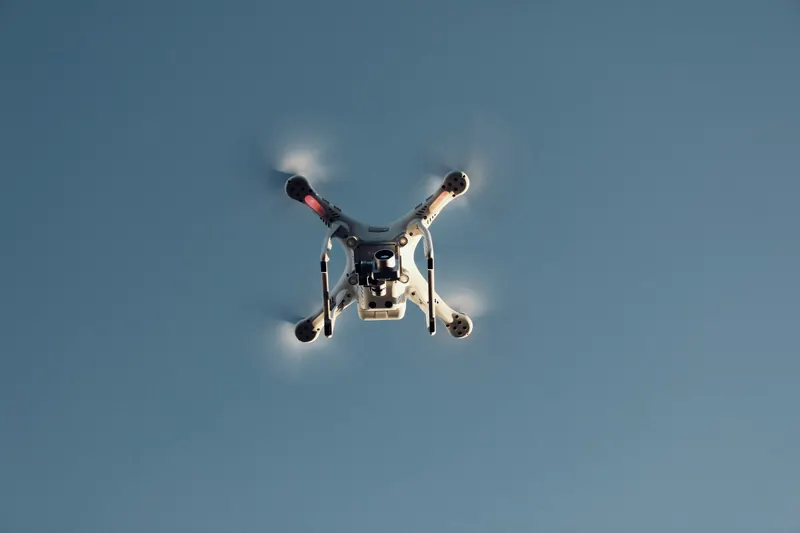
Ground‑to‑air sensing
Detection, tracking and classification of low-altitude targets and small UAVs with ground-based FMCW radar and RF sensors. The principal applications are the protection of sites, units and convoys.

Air‑to‑ground sensing
Sensors that look down from air platforms: FMCW radar altimeters, approach and landing support, terrain and obstacle sensing, proximity sensors and ground target detection. Small size and low power consumption are the first requirements in this area.
Technologies
FMCW radar and sensor technologies shared by both application areas.
Radar and RF sensors
Short-range FMCW radar sensors whose chirp waveform, antenna and RF front end, signal processing and calibration are designed together. The common technology base of both application areas.
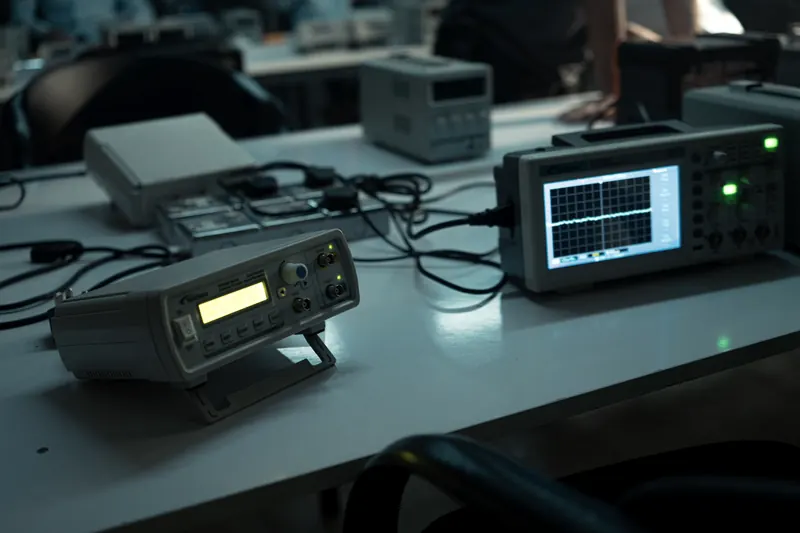
Sensor electronics and embedded software
Small, low-power sensor boards designed for series production and the real-time embedded software that runs on them; data interfaces, built-in test and production test.
Core capabilities
The capabilities on which the four business areas rest, in one list. Each item links to the business area page where it is described in detail.
FMCW waveform design
Setting chirp slope, bandwidth and frame structure to the application’s range, velocity and resolution requirements; ambiguity and clutter behaviour examined by simulation.
Antenna and RF front end
Printed antenna arrays, feed networks and the RF front end; noise figure, linearity and transmit-receive isolation optimised on the basis of measurement.
Radar signal processing
Range and Doppler FFT processing, constant false alarm rate (CFAR) detection and angle estimation; algorithms designed together with the processor or FPGA architecture they run on.
Target tracking and classification
Kalman-filtered track initiation, maintenance and termination; small UAVs distinguished from birds by micro-Doppler signature and motion pattern.
Radar altimeter and proximity sensing
Stable height measurement over vegetation, snow, water and sloping terrain; proximity sensors for munitions and small air vehicles that report distance to the ground at set thresholds.
Passive RF sensing
Detection and direction finding of UAV command and control and video link emissions; passive detections fused with radar data.
Calibration and measurement
Channel gain and phase, range zero offset and temperature drift calibration; verification with reference targets and moving-target set-ups.
Sensor board design
Multilayer boards that combine the RF, analogue and digital sections, designed for impedance and power integrity, series production and production-line test.
Real-time embedded software
Measurement cycle, fault handling and safe state; built-in test (PBIT, CBIT, IBIT); defined interfaces over CAN, UART/RS-422, SPI and Ethernet.
Environmental robustness and qualification
Mechanical and thermal design for vibration, shock, temperature, humidity and pressure; tests planned to MIL-STD-810 and MIL-STD-461 and carried out at accredited laboratories.
Contact
Sentirox can be reached by email for corporate matters, collaboration enquiries and job applications.