
Air‑to‑ground sensing
Sentirox works on sensors carried on air platforms that measure height above the ground and sense the terrain and targets below.
Low-altitude flight, landing, payload release and range-sensing functions on munitions all depend on an air platform knowing reliably its height above the ground, the shape of the terrain below and the objects on it. Barometric and satellite-based methods do not give height above ground level (AGL) directly; downward-looking active sensors measure it directly, without relying on a terrain database.
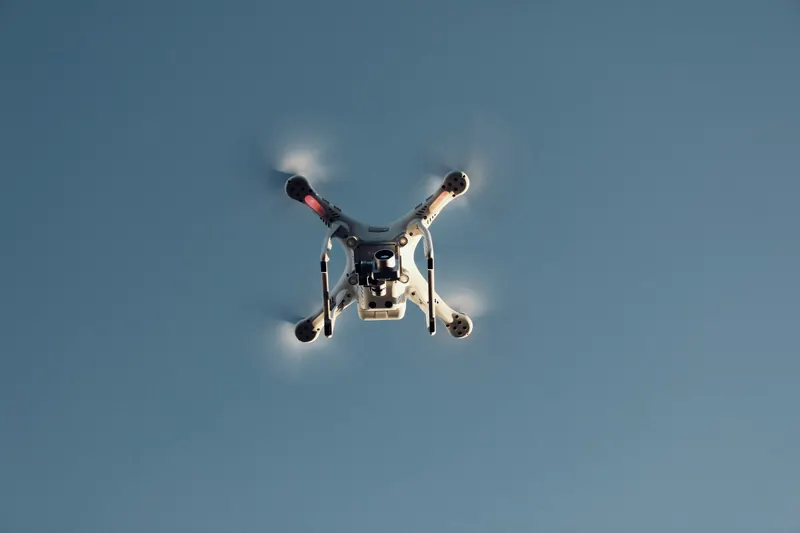
In air‑to‑ground sensing, Sentirox works on sensors for which small size, low weight and low power consumption are essential. Platforms with limited volume and power, such as UAVs and munitions, drive the design decisions in this area.

Focus areas
FMCW radar altimeter
Continuous FMCW radar measurement of height above the ground, with waveform and processing methods for stable measurement over surfaces such as vegetation, snow, water and sloping terrain. Measurement accuracy and update rate are set by the platform’s flight envelope.
Approach and landing support
Measuring height above ground and descent rate during landing and take-off, and supplying proximity data over the final metres to the flight control system of vertical take-off and landing UAVs through a defined interface.
Terrain and obstacle sensing
Sensing the terrain profile and obstacles with forward- and downward-looking sensors in low-altitude flight, including the detection of thin obstacles such as poles, wires and cables, and trees.
Proximity sensors
Sensors for munitions and small air vehicles that report the distance to the ground or surface at predefined thresholds. Small volume, high acceleration, fast start-up and short operating time shape the design of these sensors. The scope of this work is the range-sensing element; safety and initiation functions are outside it.
Ground target detection
Detecting stationary and moving objects on the ground from an air platform, including ground moving target indication (GMTI), compensation of the clutter Doppler spread caused by platform motion, and clutter suppression. Detections are reported in a format the platform’s mission systems can use.
Size, weight and power
Sensor mechanics that fit munition and small-UAV volumes; antenna and board integrity under high acceleration and vibration; short-duration, low average power profiles suited to battery or platform supply.
Test, verification and qualification
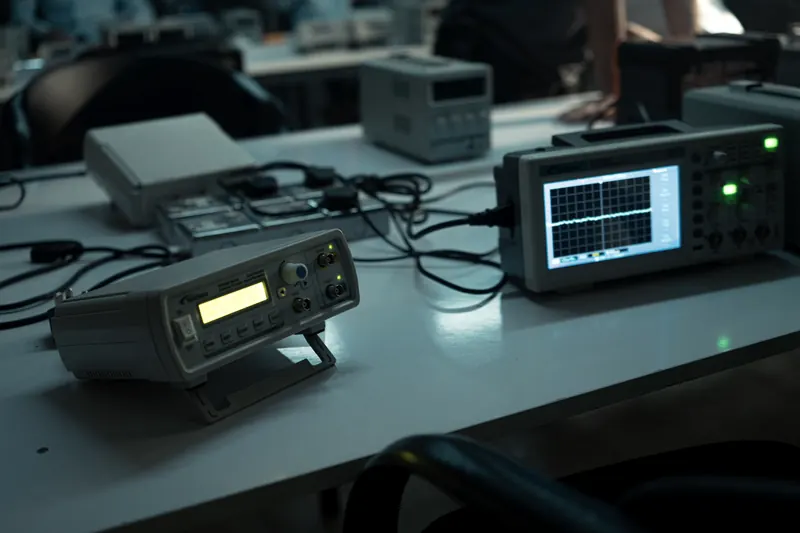
Air‑to‑ground sensors are measured on the bench with reference targets for range and velocity accuracy; the effect of different surface types is examined using laboratory and outdoor test set-ups.
Flight trials are planned on instrumented UAVs, compared against position data recorded by an independent reference such as RTK-GNSS or a laser rangefinder. The recordings are used to develop the sensor software in a replay environment.
Vibration, shock, acceleration, temperature and pressure tests, and electromagnetic compatibility tests, are planned in accordance with the military standards that apply to the platform on which the sensor will be used, and carried out at accredited test laboratories.
Other business areas

Contact
Sentirox can be reached by email for corporate matters, collaboration enquiries and job applications.